How I Design Systems That Solve Complex Operational Challenges
We live in a world where having a well-built system is crucial not only for businesses, but for individuals as well. Notion systems are ideal for this as they’re incredibly accessible and powerful. They offer a wide range of solutions and features that can significantly elevate how a business operates.
Understanding the Basics
It’s important to understand the difference between a simple template, which solves a specific problem, and a system, which offers solutions for complex matters.
A simple template solves a specific problem and relies on one main database which handles everything inside the setup. Simple does not mean ineffective; sometimes it’s the smartest approach. A habit tracker, for example, works best as a simple template. Creating it by using a simple template is easy, quick, and much more user-friendly.
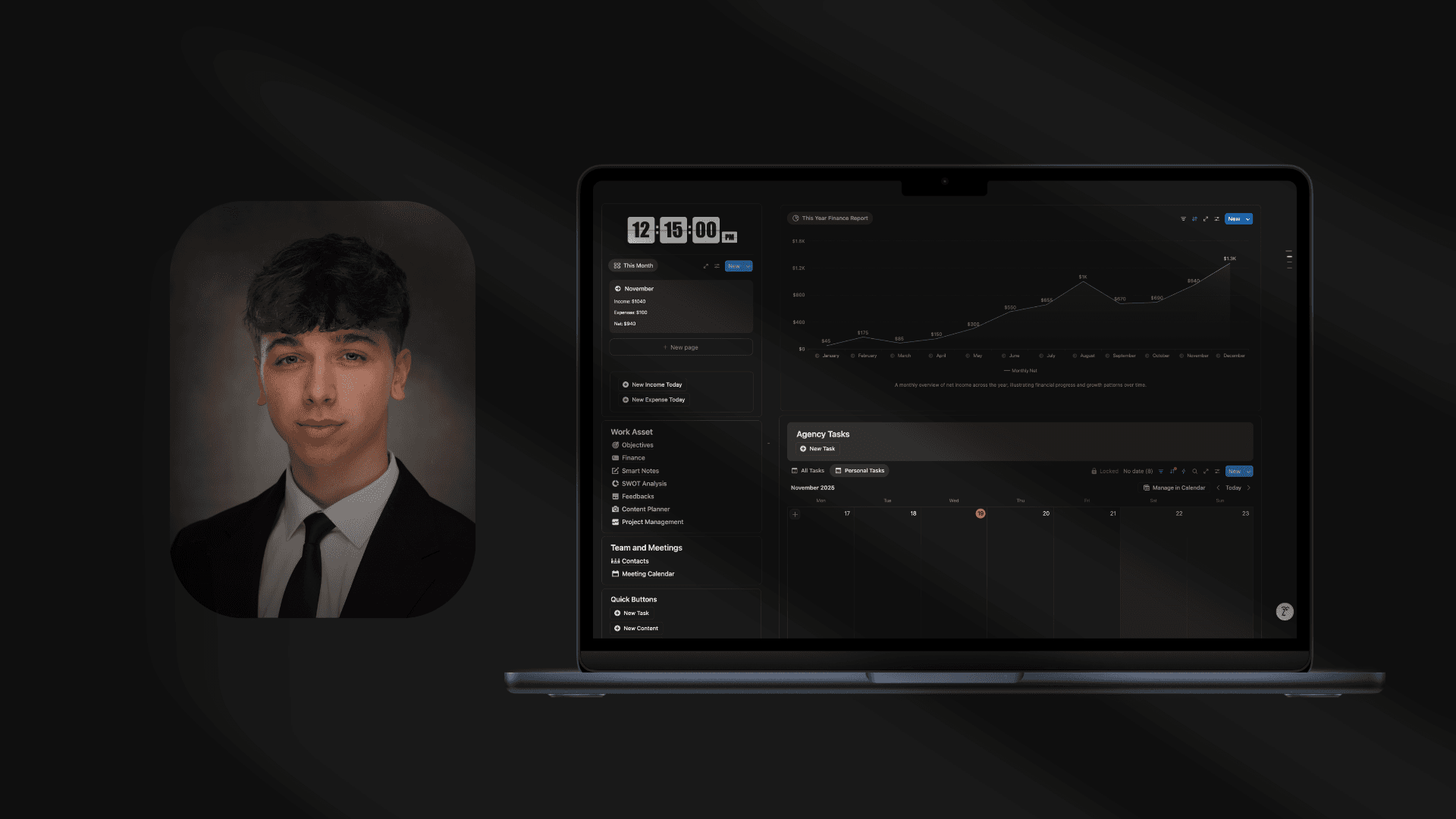
A system, however, is a different story. Systems are built with several databases, interconnected elements, and automations. They handle complex, multi-layered operations and streamline tasks that would otherwise take years to optimize. These systems are always unique and can range from a project management framework to a full operational workflow for an entire company. They structure recurring tasks and reflect real-life scenarios.
The Process
I’ll be honest, building such complex systems takes time with all the planning and energy they require. But this is the only way to do them right. I could use AI to create my products and just hand them over to customers, but it wouldn’t embody the values or quality I stand for.
My process always starts with mapping the problem. This requires several meetings to truly understand a company’s challenges. I approach it thoroughly because this is arguably the most important step, as it lays the foundation for everything that comes after.
Each time I start planning the system design, the first thing I create is a mind map. It helps me outline the path from the problem to the solution.
Once the direction is clear and approved, I start building role-specific pages that will form the system. This includes a control centre and several subsystems, each designed for the employees responsible for that specific area. This ensures clarity and data protection.
As soon as the technical part is complete and the SOPs (System Operation Procedures) are finalized, the implementation begins. Each worker receives a personalized guide which helps them integrate the workflow into their daily routine. I always use real-life scenarios in the guides, as they are easier to understand when learning something new—in this case, a program.
Overall, this is how I approach a new company’s challenges with a fresh, young perspective. I always make sure that customers can ask questions freely after the implementations. If any problem occurs, I’m there to help with it.
Ultimately, I believe it’s important to have faith in the companies and people someone works with. I’m always rooting for my customers’ success and for them to achieve what they’re truly meant for.